What Is Restorative Justice?
Restorative justice is a voluntary process that brings together people affected by crime—victims, offenders, and their whānau—to talk about what happened, how it affected them, and what can be done to put things right.
At its heart, restorative justice is about healing and reconnection, rather than punishment. It gives victims a chance to be heard, helps offenders take real responsibility for their actions, and allows everyone involved to work towards a sense of closure.
A Different Approach to Justice
Traditional justice systems often focus on rules and consequences. Restorative justice focuses on people—the harm caused, the needs that arise from it, and how to repair that harm in a meaningful way.
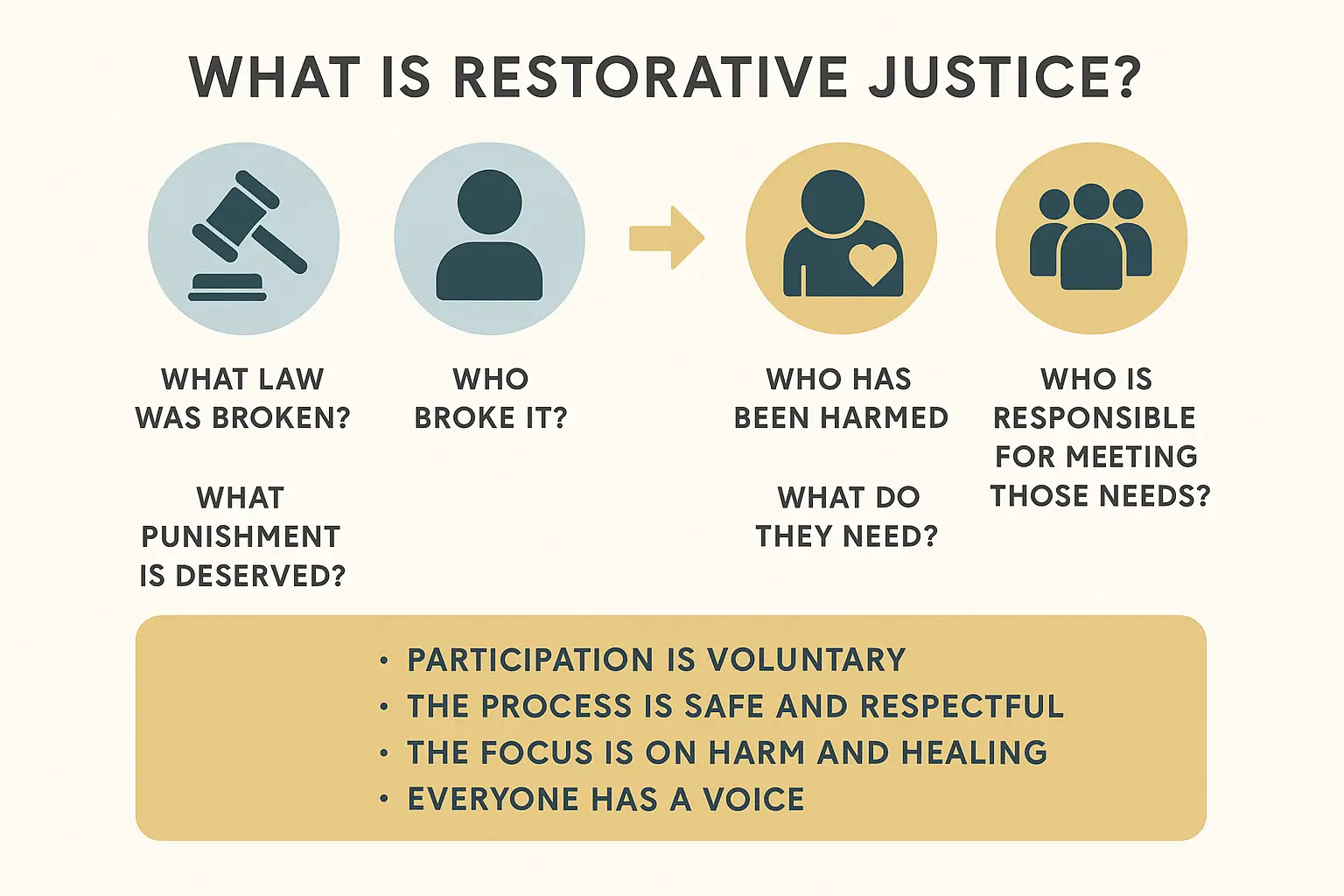
Instead of asking:
- What law was broken?
- Who broke it?
- What punishment is deserved?
Restorative justice asks:
- Who has been harmed?
- What do they need?
- Who is responsible for meeting those needs?
Key Principles of Restorative Justice
Participation is voluntary
The process is safe and respectful
The focus is on harm and healing
Everyone has a voice
Outcomes are meaningful
Who Can Take Part?
Restorative justice is most often used after someone has pleaded guilty to an offence and before sentencing. It is offered through the court process, but participation is completely voluntary for both victims and offenders.
In some cases, restorative justice may also be used outside the formal court system—particularly in community or youth settings—where there is a willingness to engage in dialogue.
Why It Matters
Restorative justice can be a powerful step towards healing for everyone involved. Victims often report feeling more understood and empowered. Offenders have the chance to see the real impact of their actions and take responsibility in a way that goes beyond a sentence.
Restorative justice can:
- Reduce reoffending
- Strengthen community connections
- Promote accountability and empathy
- Provide a greater sense of resolution and justice